




Walk down Avenida Revolución and you'll see them everywhere: jaguars and skulls covered in tiny glass beads, gourd bowls patterned in electric colour, square paintings made of yarn. This is the art of the Wixárika, the people most visitors know as the Huichol, whose homeland is in the mountains a few hours inland from Sayulita.
Each piece is made by hand, bead by bead or strand by strand, and its designs come from a religion still practised today. Buying one well means knowing a little about what you're looking at, paying a fair price and making sure the money reaches the person who made it.
Who the Wixárika are
The Wixárika (plural Wixaritari) call themselves by that name; Huichol is what others have called them. Their homeland is the canyons and high country of the Sierra Madre Occidental, mostly in northern Jalisco and Nayarit, with smaller communities in Durango and Zacatecas. Their language, also called Wixárika, belongs to the Uto-Aztecan family and is one of Mexico's recognised national languages. Several hundred Wixaritari live around Puerto Vallarta and Bahía de Banderas, many of them artisans.
At the centre of their religion is a pilgrimage of hundreds of kilometres to Wirikuta, a sacred desert in San Luis Potosí. In July 2025 UNESCO inscribed the route and its sacred sites as a World Heritage Site, the Wixárika Route through Sacred Sites to Wirikuta, crossing Nayarit, Jalisco, Zacatecas, Durango and San Luis Potosí.
- 71,000
- Wixaritari in Mexico at the 2015 count
- 550 km
- of pilgrimage route to Wirikuta, on UNESCO's list since 2025
- 5
- states the route crosses, Nayarit among them
Two crafts: beads and yarn
The art you'll see most often comes in two kinds, both built on a bed of beeswax and resin. Beyond them, look out for ojos de Dios (god's eyes woven from yarn on crossed sticks), embroidered clothing, and bags and sashes woven on a backstrap loom.
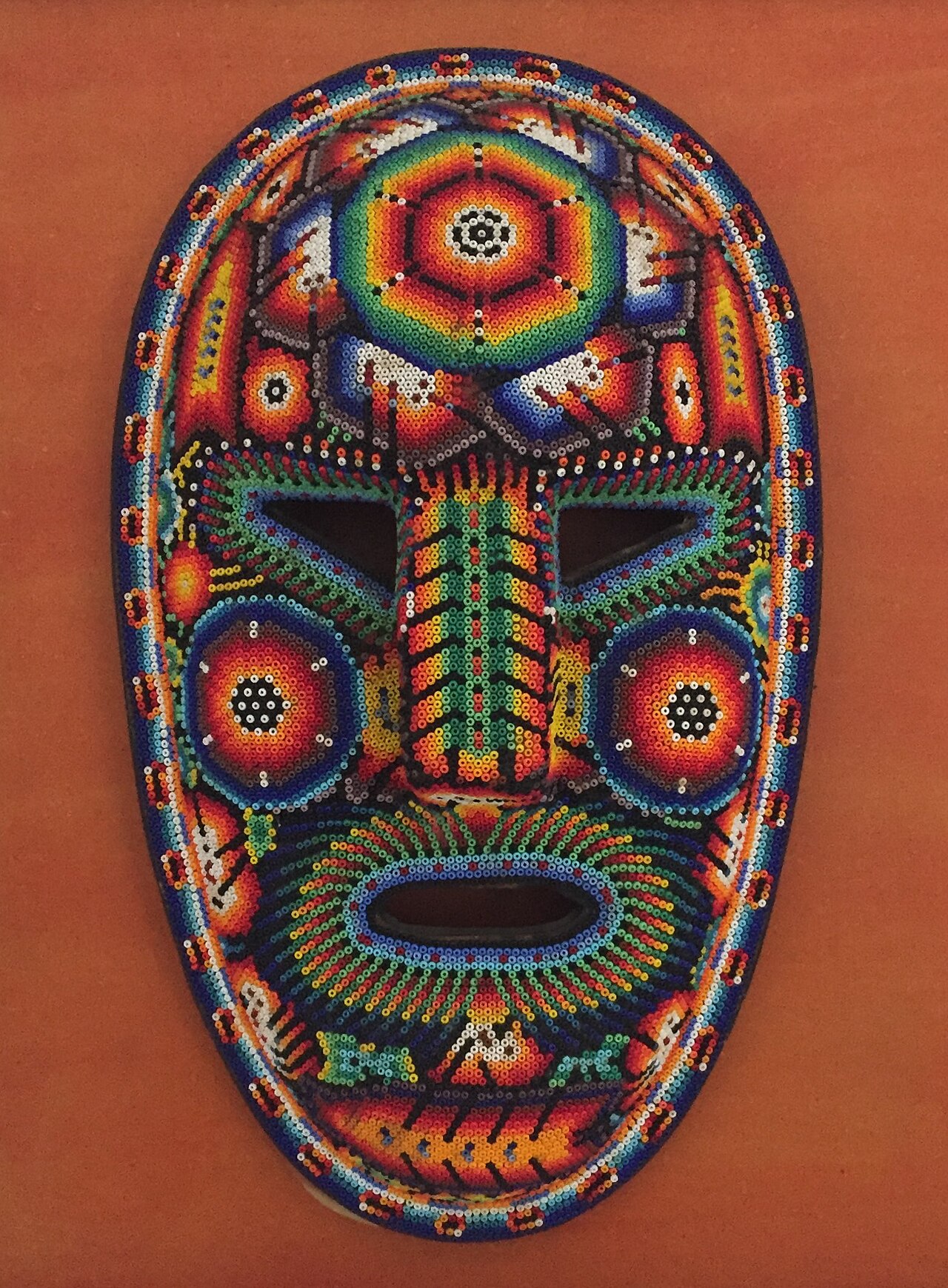
Beadwork (chaquira)
- Tiny glass beads pressed one at a time into wax and resin
- On carved wooden figures, gourd bowls, masks and jewellery
- Jaguars, deer and skulls are common forms
- A big piece is many hours of work
Yarn paintings (nierika)
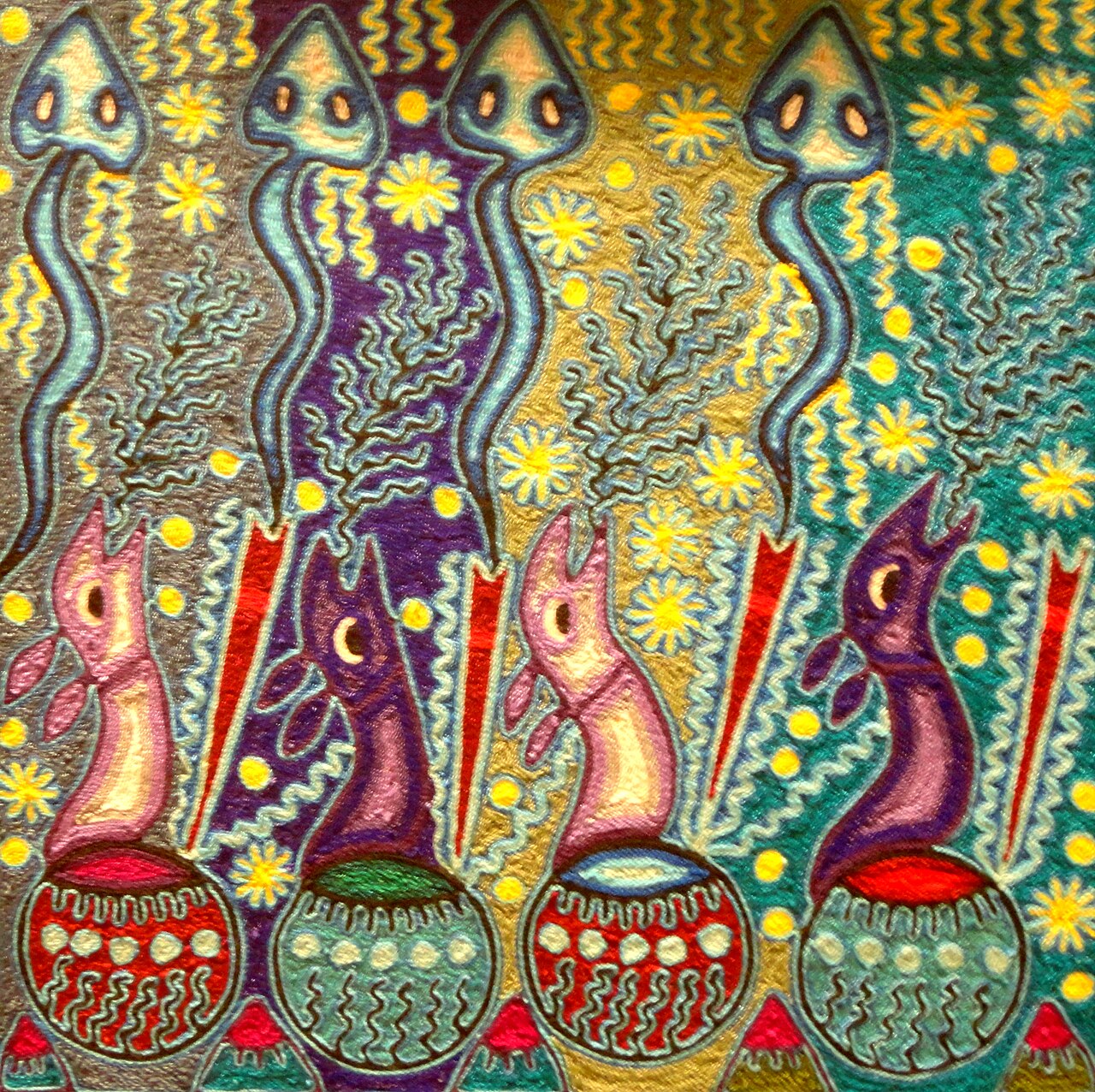
- Coloured yarn pressed strand by strand into a wax-coated board
- Grew out of round ceremonial discs used to record visions
- Dense scenes of gods, animals, corn and fire
- Often signed, with the story written on the back

Reading the symbols
Three things sit at the heart of Wixárika belief and turn up again and again in the art: corn, the deer and peyote, which they call hikuri. Corn and deer stand for sustenance; peyote is gathered on the pilgrimage to Wirikuta and used in ceremonies led by the mara'akame, the ritual specialist. Kauyumari, the blue deer, is a guide between worlds and one of the most common figures you'll see.
Look too for the sun and fire, serpents (linked to rain), scorpions, feathered arrows and offering bowls. Meanings differ between artists and communities, so the best way to know what a piece says is to ask the person who made it, and many artists will write the story on the back if you ask.
Ask what a piece means. The answer is part of what you're buying.
How to tell real work
Mass-made copies are common in tourist towns, and some are sold as Huichol. A few checks help.
Ask who made it and where they're from. A good seller can name the artist and the community; a yarn painting often has the artist's name and a description on the back.
Look closely at the work. Real beadwork has each bead set individually into wax, sitting in tidy rows that follow the curves of the piece. Real yarn is pressed into a wax-and-resin base, not glued flat onto card.
Be wary of very low prices and of the same design repeated across many stalls. Handwork like this takes many hours, and the price should reflect that.
When you can, buy from the artist directly, or from a shop that names its artists and pays them fairly.
Where to see and buy it in Sayulita
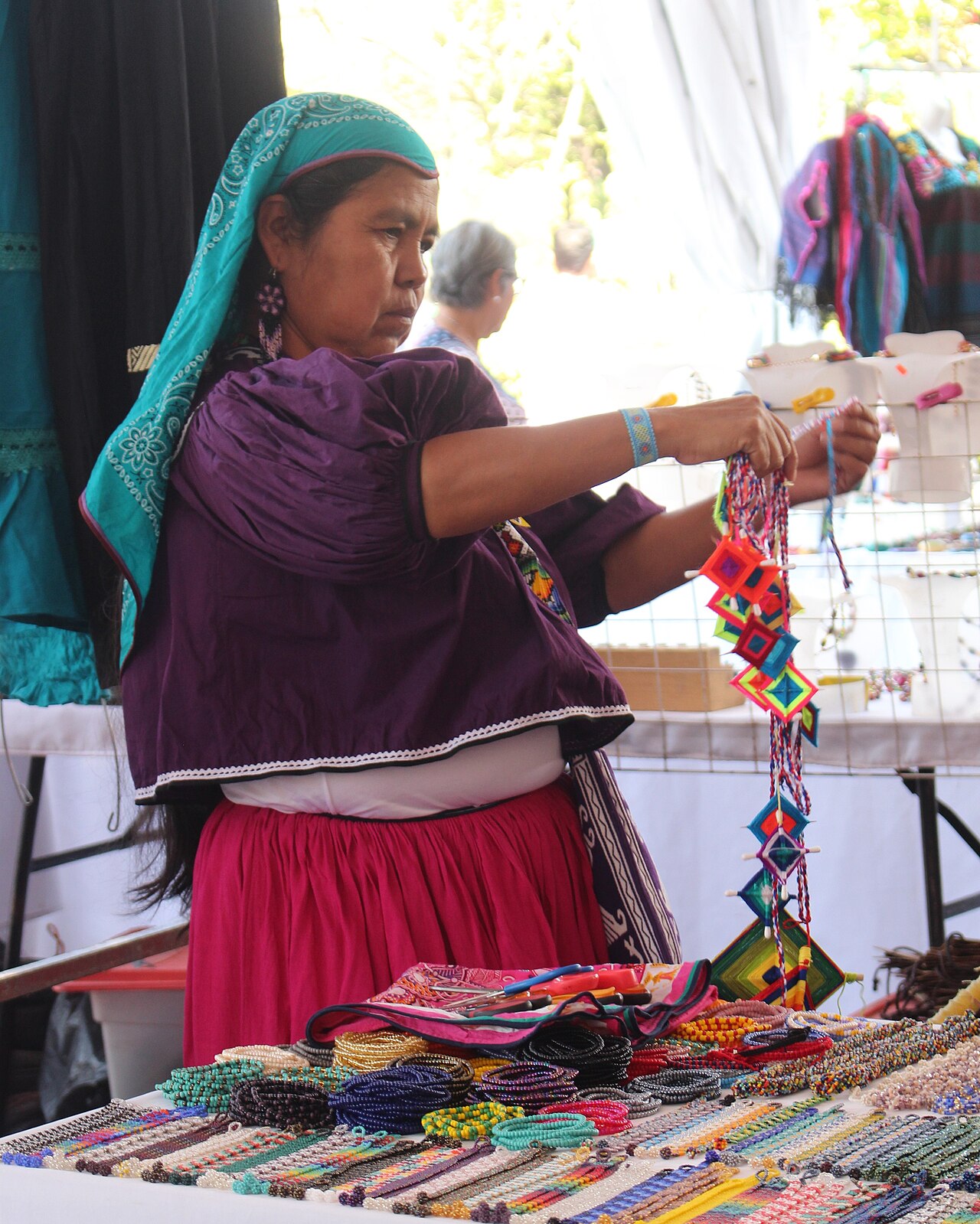
Wixárika artisans sell around the plaza and in the side streets, often in person, and several galleries and folk-art shops on and near Avenida Revolución carry their work. Start with a gallery devoted to it, then compare.
The open-now list below tells you which of these are open at this moment, where we have their hours.

Pampariyutsi Galería de Arte Wixárika
A gallery of Wixárika art on Avenida Revolución, a shop where you can ask about the makers.
Laughing Jaguar
Mexican folk-art shop with Huichol yarn paintings among its alebrijes and tin work.
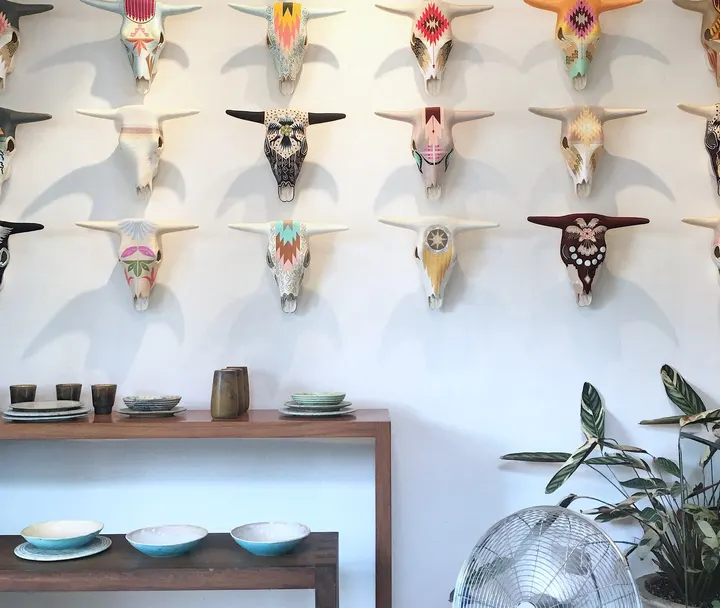
Evoke The Spirit
Design shop of Mexican-made goods that includes Huichol art alongside textiles and ceramics.
Hippie Market
A row of artisan stalls near the plaza with beadwork, woven bags and jewellery; ask who made what.
Buying with respect
Bring cash: many artisans selling in the street don't take cards. Some friendly bargaining is normal at a stall, but remember the hours in the piece and don't push a maker below what's fair.
Ask before you photograph an artisan at work or their children. And treat the sacred side of the art as sacred: the designs carry religious meaning, and peyote is a sacrament, not a souvenir.
The best of it, beyond Sayulita
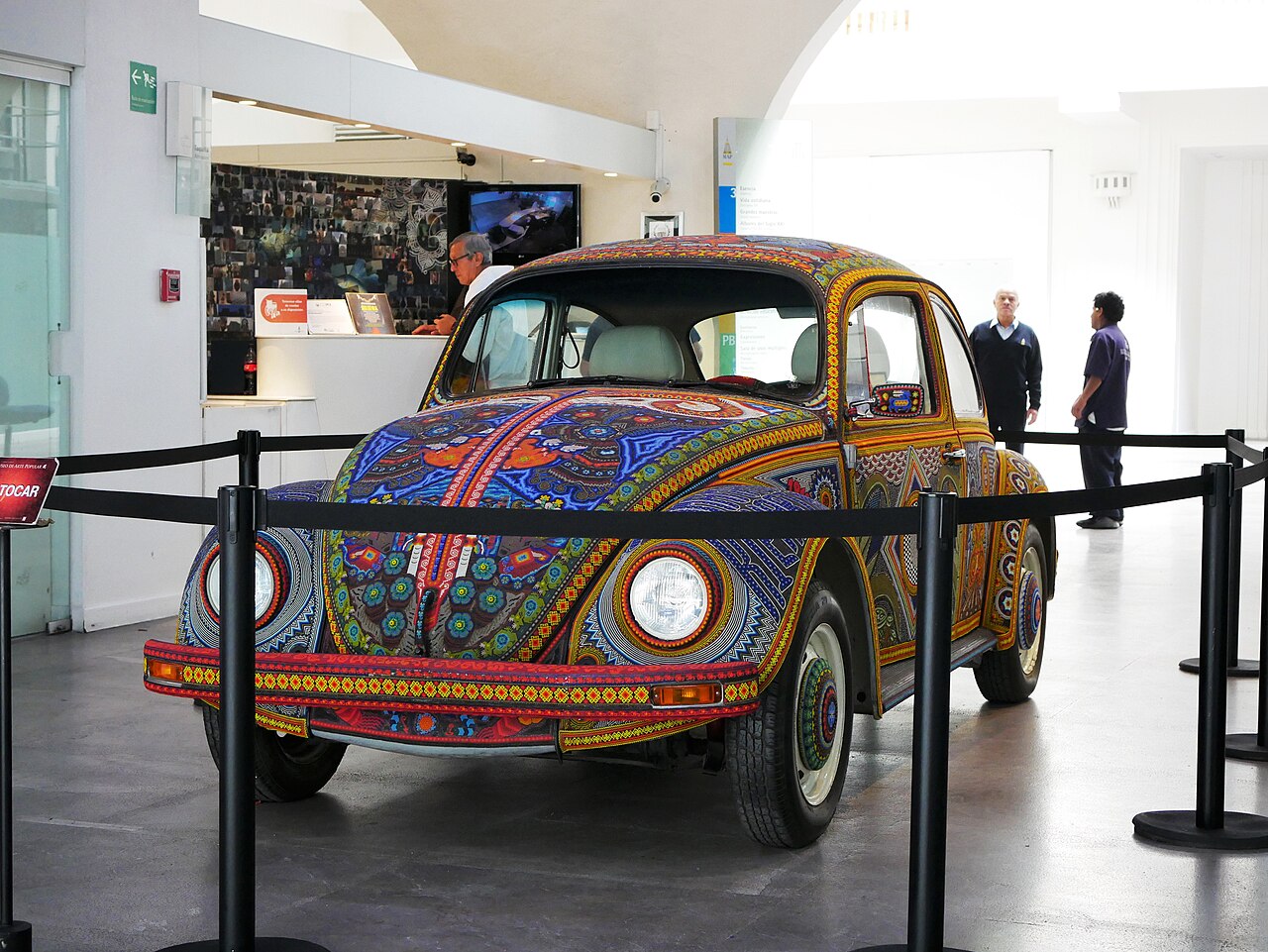
To see Wixárika art at its most ambitious, look at the Vochol, a Volkswagen Beetle covered inside and out by eight artisans in about 2.3 million beads over some 4,760 hours, now shown at the Museo de Arte Popular in Mexico City.
Closer to home, the Museo de Arte Huichol Wixárika in Zapopan, beside the basilica, is devoted to it, and in Guadalajara a large mural by the Wixárika artist José Benítez Sánchez, La semilla del mundo, is in the Juárez light-rail station. Check museum hours before you travel.

Questions people ask
What is the difference between Huichol and Wixárika?
They're the same people. Wixárika is their own name (Wixaritari in the plural); Huichol is the name others gave them, and both are used.
How can I tell if Huichol beadwork is real?
Each bead should be set by hand into wax in neat rows, and the seller should be able to name the artist and community. Be wary of very cheap pieces and identical designs on many stalls.
Where can I buy Huichol art in Sayulita?
From Wixárika artisans around the plaza, and from galleries and folk-art shops on Avenida Revolución, including Pampariyutsi, a gallery of Wixárika art.
How should I care for a beaded piece?
Keep it out of direct sun and heat, which soften the wax that holds the beads, and never leave it in a hot car.
Written by sayulita.co from our own research, checked against 3 sources. Nothing here is paid for. Photos: Juan Carlos Fonseca Mata (CC BY-SA 4.0); PLBechly (CC BY-SA 4.0); Carlos Raúl Camacho Acosta (CC BY-SA 4.0); Thayne Tuason (CC BY 4.0). See something out of date? Tell us.
