




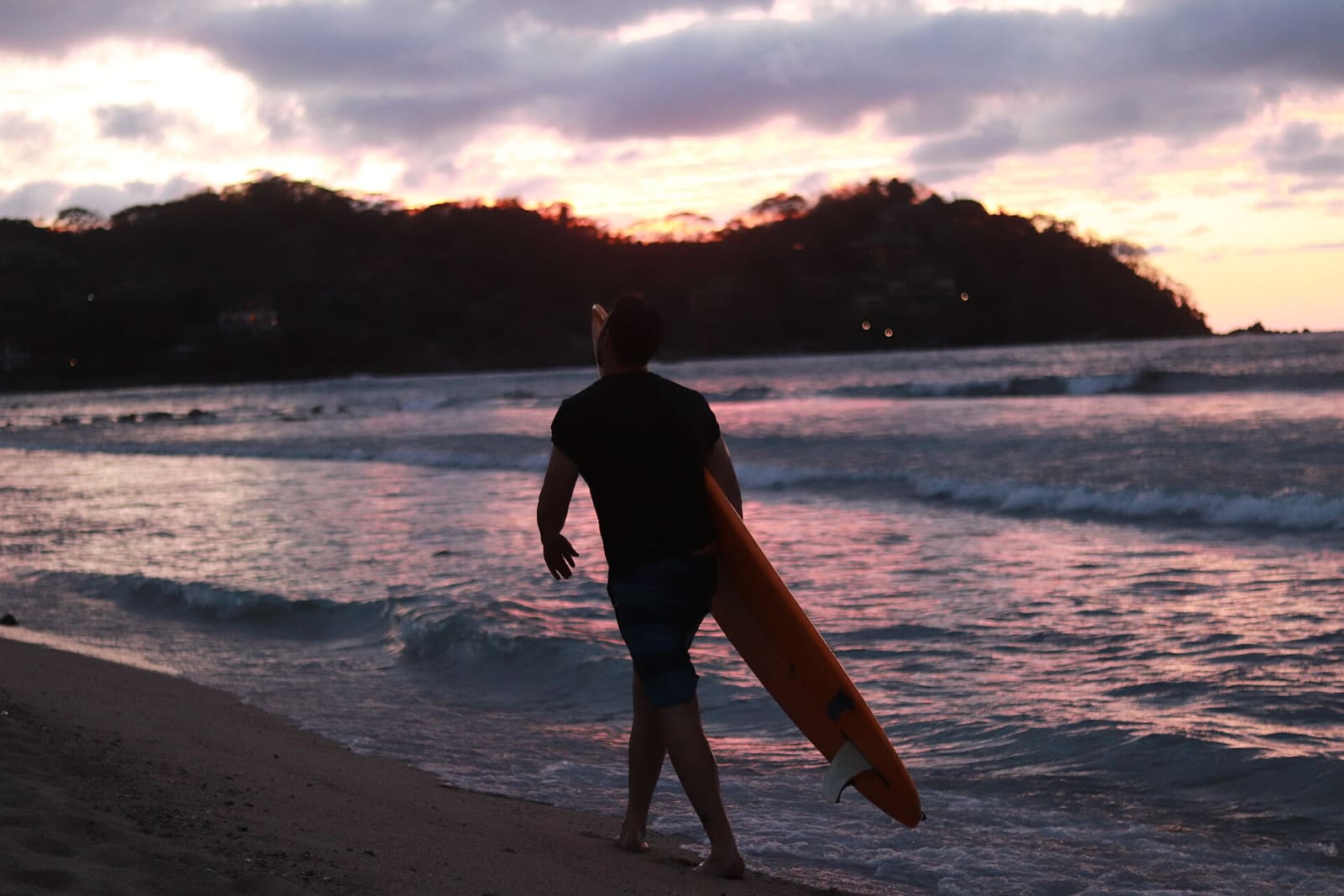
Sayulita is one of the easiest places in Mexico to stand up on a board for the first time. The main beach has a slow, sand-bottomed wave in warm water, and there are surf schools every few doors from the plaza to the beach.
The catch is that everyone else knows this too. Here's where to go, when to go, who to learn with, and how to share a busy lineup without annoying the locals.
Which waves are for beginners
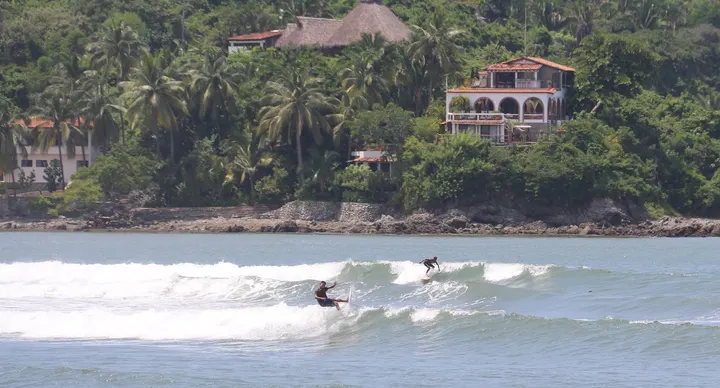
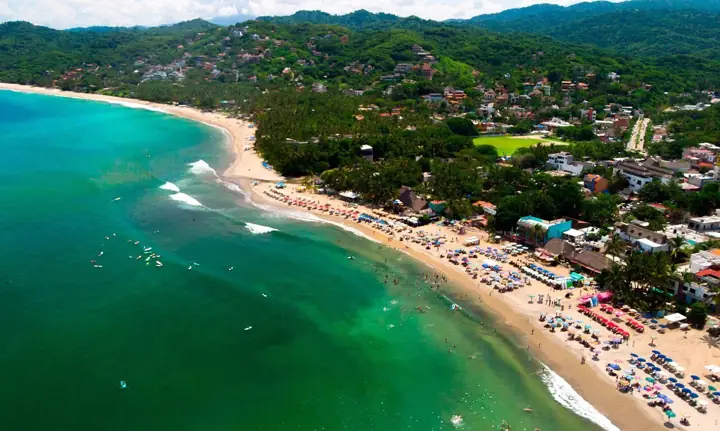
Learners belong in the middle of the main beach, roughly in front of the fishing pangas, where the bottom is sand, the water is often shallow enough to stand in, and the waves roll in slowly. This is where almost every lesson happens, so you'll be in good company.
The wave at the north end by the river mouth, the Sayulita right, is a different animal. It breaks over sand mixed with rocks and patches of reef, holds most of the town's experienced surfers, and gets stronger currents when a swell is running. Watch it from the beach until you can turn and paddle a board with confidence. There's also a left off the river mouth, but it mostly shows on bigger summer swells and isn't one to learn on.
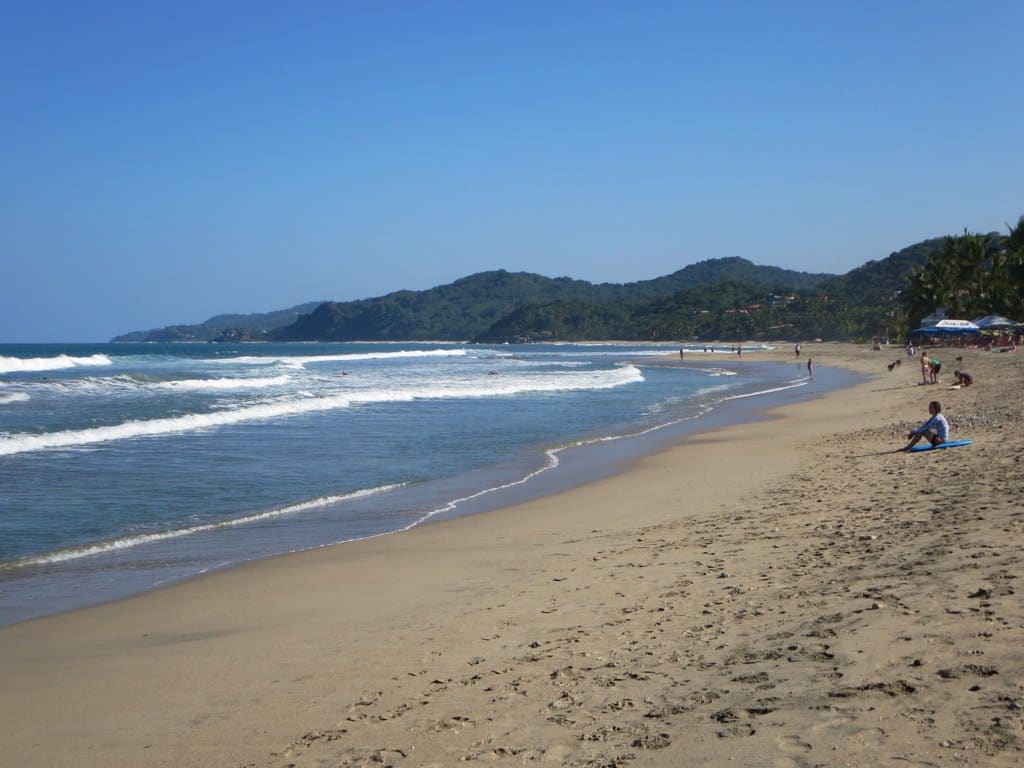

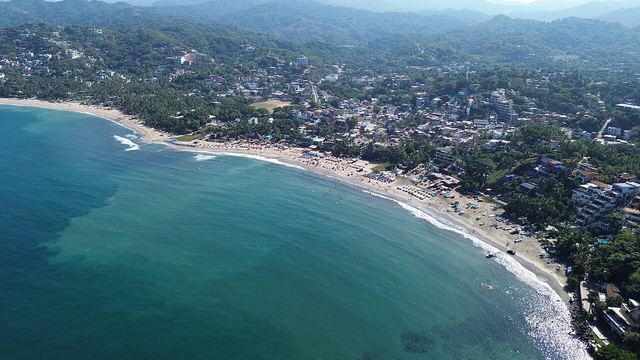
Playa Sayulita
The learning zone is the sandy middle of the main beach, in front of the fishing boats.
Playa Sayulita Norte (North Beach)
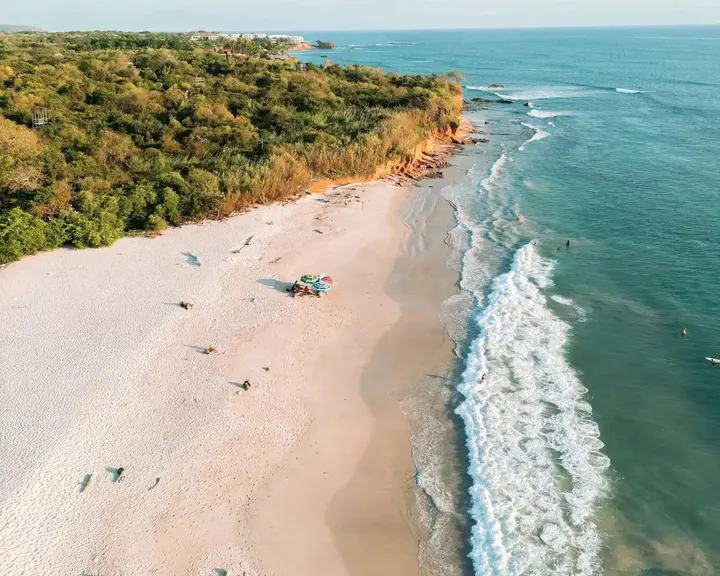
Quieter for a swim on small days, but the river-mouth break here is for surfers who already know the basics.
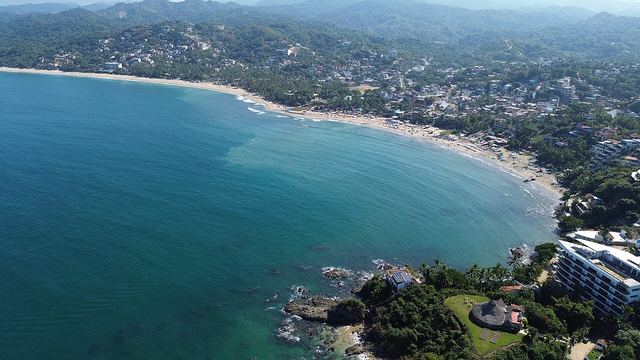
Playa los Muertos
Sheltered cove south of town; no surf to speak of, but a calm place to practise paddling a board or SUP.
Best season and time of day
Beginners have it easiest from about November to May. Swells come mostly from the north and northwest, waves stay small and steady, and mornings are often glassy. This is also high season, so the lineup is at its busiest, especially around Christmas and from February to April.
From June to October, south swells bring bigger, more powerful waves, the water is at its warmest, and heavy rain can wash brown runoff from the river into the north end of the beach. The eastern Pacific hurricane season also runs through these months. You can still learn in summer on smaller days, but take a lesson rather than going it alone.
Whatever the month, go early. The wind usually picks up and turns onshore by early afternoon, making the waves choppy, and dawn sessions also beat the crowds. For the right, sources agree it works best around mid to low tide.
Lessons and surf schools
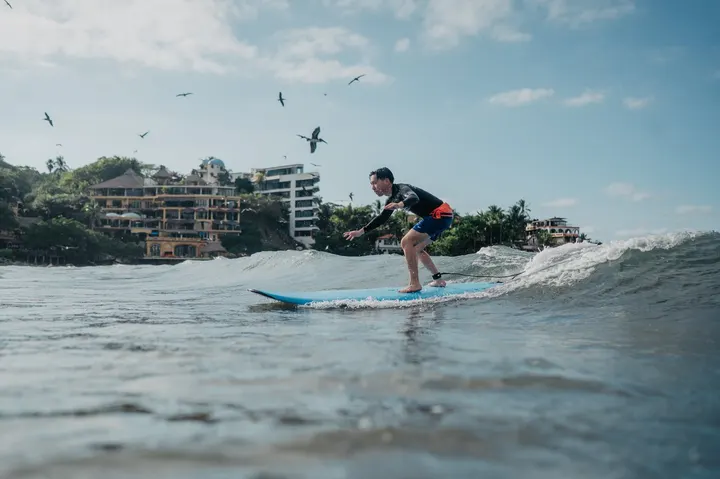
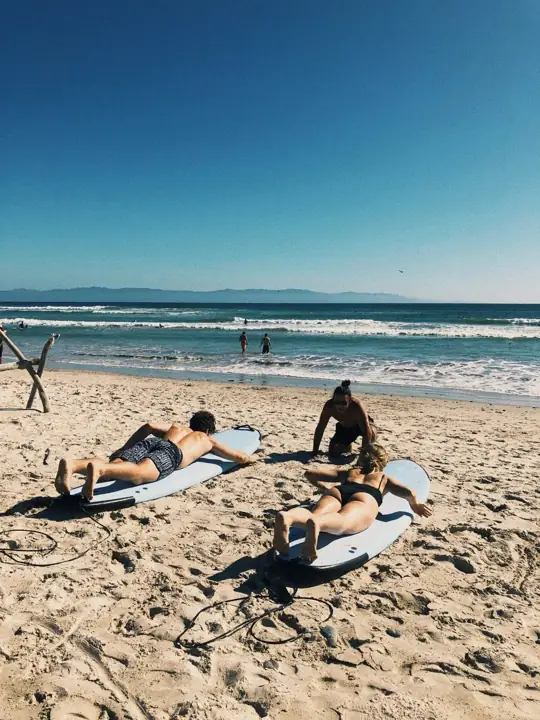
A first lesson usually runs between an hour and a half and two hours: a short session on the sand covering paddling, popping up and safety, then most of the time in the water with an instructor pushing you into waves. A soft-top board and a rash guard are almost always included.
In 2025 and 2026, group lessons listed online mostly cost about 50 to 85 US dollars a person, with private lessons higher. Prices in pesos are often a little lower if you book in person. Ask how many students share one instructor; smaller groups mean more waves for you.
Most schools are locally run, many by surfing families who've taught here for twenty years or more. In high season, book a day or two ahead.
Lunazul Surf School & Shop
Private 90-minute lessons on Calle Marlín near the break; if you don't stand up the first time, the second lesson is free.
Surf'n Sayulita
Teaching since 2005 with ISA-certified instructors; a short beach briefing, then 90 minutes in the water.
Marea Surf School
Family-owned, with local instructors and no more than four students each; can also take you to La Lancha.
Sayulita Surf School
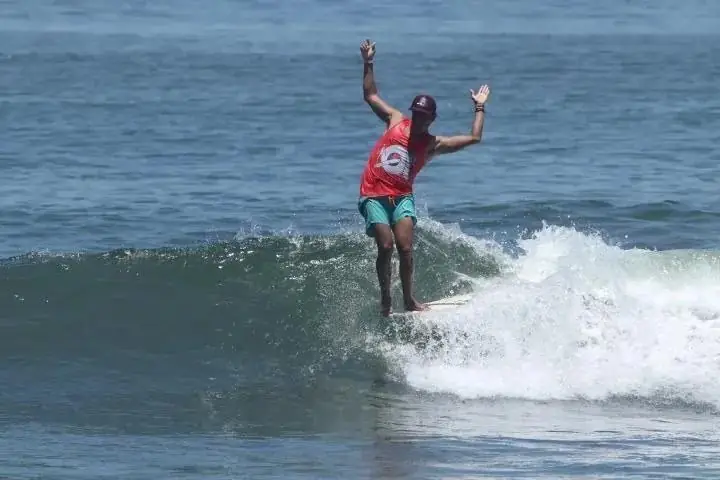
Run by the González brothers, competitive longboarders, with lessons for adults and kids.
Costeño Surf School
Long-running local school right on the main beach, with two- and four-hour lessons, private or group.
Mexican Surf Mafia
Family outfit dating to 2004 and home to Sayulita's first surf team; teaches all ages.
Sayulita Surf Center
Fernando Stalla's school at Hotel Sayulinda, with level-based coaching and video analysis once you're up and riding.
Sayulita Surf Coach
Private, bilingual lessons with local longboarder Joel Barraza, from first waves to style coaching.
Renting a board
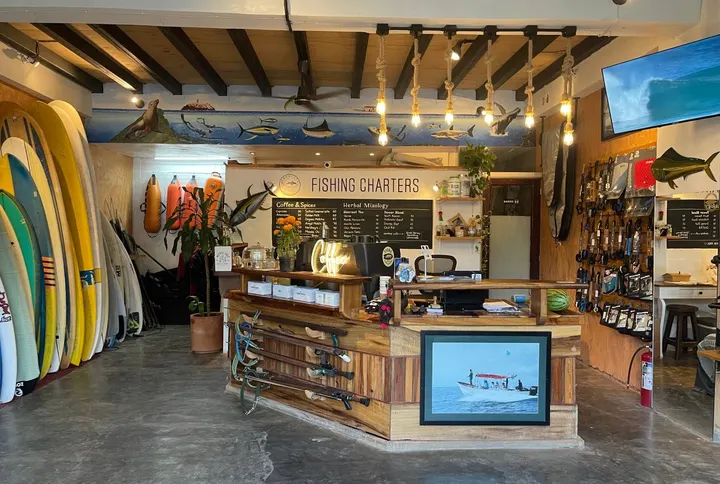
Once you can catch and ride whitewater on your own, renting is cheap. Board shops and stands along the beach and the streets near it rent by the hour, day or week; in 2025 and 2026 a foam or soft longboard was commonly about 300 to 500 pesos a day, with weekly rates and a deposit at most shops.
Take the biggest, thickest soft board they'll give you, around eight to nine feet. It's more stable, catches waves earlier and hurts less when it hits you. Check the leash and fins before you walk out.
WildMex Surf School & Adventure Center
Hundreds of rental boards plus SUPs, with hourly to long-term rates, and a shuttle to La Lancha.
Surf N Roll Sayulita
Family-owned shop in the center since 2008, renting boards as well as running lessons and kids' camps.
Mainland Surfboards
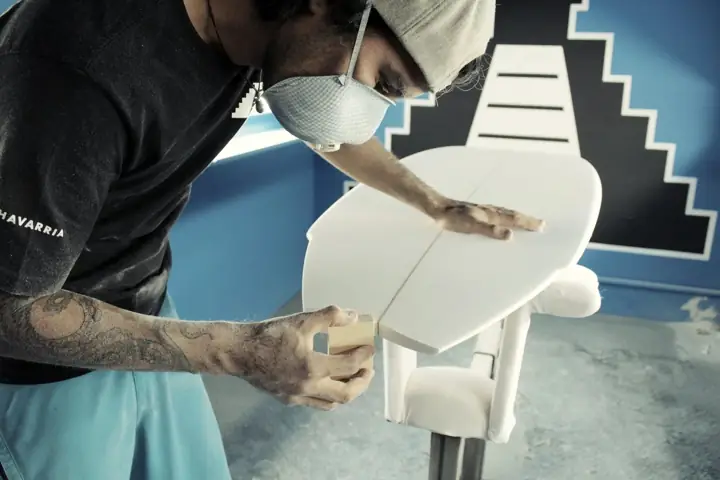
Local shaper with good-quality rentals and ding repairs, for when you're ready for a hard board.
Ancla Sayulita
Beach bar in front of the main break that rents boards; handy for an hour's session and a tostada after.
Lineup etiquette
The basic rule is the same everywhere: the surfer closest to where the wave is breaking has priority. If someone is already up and riding, don't take off in front of them. When paddling back out, go around the area where people are riding rather than through it, and if you're in someone's path, paddle toward the whitewater so they can pass behind you.
Hold on to your board. A loose soft-top in a crowd is the most common way people get hurt here. Stay in the learner zone until you can control where you go, smile, and let the regulars have the right.
Staying safe in the water
Falling on sand is forgiving, but a few things catch beginners out. Currents pull hardest near the river mouth and on bigger swells, so if you feel yourself drifting, paddle across the pull, parallel to the beach, rather than straight in against it. Cover your head when you fall and come up with an arm raised.
Water quality has been in the news. In April 2025 federal health tests found high bacteria levels at Playa Sayulita; Nayarit's state health commission said a drainage problem was fixed and declared the beach fit for use days later. Sayulita wasn't among the five beaches flagged in the summer 2026 round of federal testing. After heavy rain, especially from June to October, it's sensible to stay away from the brown water near the river and to rinse off after surfing.
The sun is strong all year. Wear a rash guard, use reef-safe sunscreen and drink more water than you think you need.
Other breaks nearby
When the main beach is crowded, schools run trips to quieter waves along the coast. La Lancha, about half an hour south toward Punta de Mita and reached on a short jungle path from the road, is a peaky beach break that suits beginners on small days and better surfers when it's bigger. Several Sayulita schools teach there or run a shuttle.
At Punta de Mita itself, El Anclote is a long, slow right that's ideal on a longboard at low tide, and Punta Burros is another sandy option. To the north, San Pancho is a faster, more powerful beach break best left until you're comfortable, and Litibú is a quieter beach for beginners and intermediates that can close out.
Sea Sayulita
Plans lessons at quieter spots away from the main beach, plus surf trips along the coast.
Marea Surf School
Offers lessons at La Lancha with transport and board included.
WildMex Surf School & Adventure Center
Runs a surf shuttle from Sayulita to La Lancha, with showers and storage at the beach.
Lunazul Surf School & Shop
Runs guided surf trips to the breaks around Punta de Mita.
Questions people ask
Is Sayulita good for beginner surfers?
Yes. The middle of the main beach has a slow, sand-bottomed wave in warm water, and most surf lessons in town happen there. It gets crowded, so go early.
How much is a surf lesson in Sayulita?
Group lessons listed online in 2025–26 mostly cost about 50 to 85 US dollars a person, with private lessons higher. Board and rash guard are usually included.
When is the best time to learn to surf in Sayulita?
November to May brings the smallest, most consistent waves, and early mornings are usually the calmest. Summer swells are bigger and more powerful.
How much does it cost to rent a surfboard in Sayulita?
A soft longboard was commonly about 300 to 500 pesos a day in 2025–26, with cheaper weekly rates and a deposit at most shops.
Do I need a wetsuit to surf in Sayulita?
No. The water is warm all year; a rash guard is enough for sun protection. Some schools hand out a thin neoprene top in winter for those who feel the cold.
Is the water in Sayulita safe to surf?
Sayulita passed federal testing in summer 2026 after a drainage fix in 2025. Avoid the brown water near the river mouth after heavy rain.
Written by sayulita.co from our own research, checked against 14 sources. Nothing here is paid for. Photos: Gustavoarroyofotos (CC BY-SA 4.0); David Stanley from Nanaimo, Canada (CC BY 2.0). See something out of date? Tell us.
