







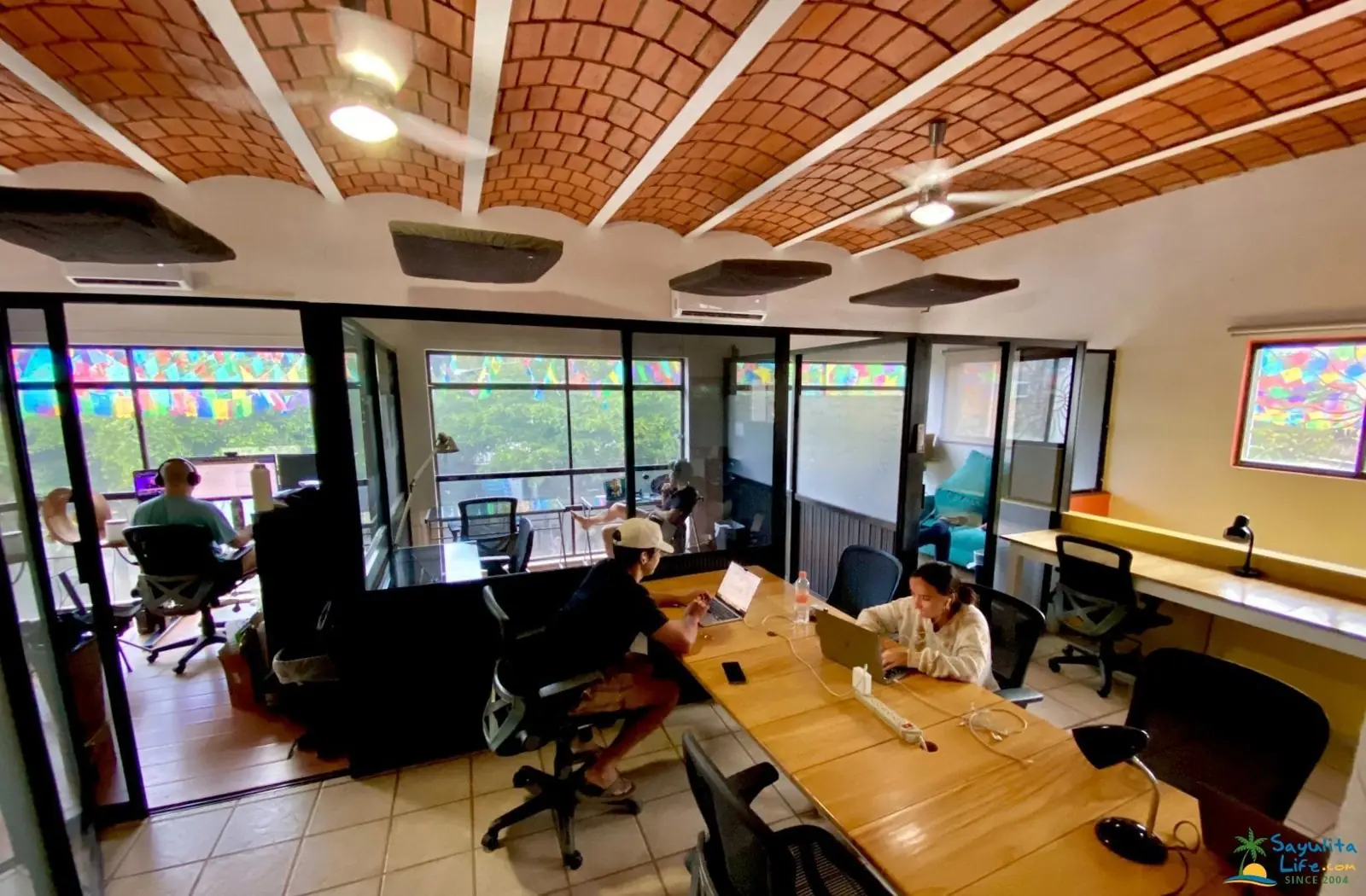
Plenty of people now spend a month or a season in Sayulita with a laptop: a surf at dawn, a day of work, the sunset from the beach. It works well, as long as you sort out a few things before you arrive, starting with the connection at the house you rent.
This guide covers the internet and what to do when it drops, where to work in town, how a working day fits around the surf and the heat, the time difference with home, what a month costs, and the rules on how long you can stay and on Mexican phone lines.
Fibre or Starlink: the connection at the house
Most homes in town get their internet over the phone company's lines, and where fibre reaches the street it's good: in 2026 Telmex raised its home plans to between 120 and 500 Mbps, with most now uploading as fast as they download. But coverage goes street by street, and a hillside house may be on an older line or none at all.
That's where Starlink comes in. In Mexico the residential plan was 1,250 pesos a month and the Lite plan 1,000 in late 2025, with the kit about 7,599 pesos, and speeds of roughly 100 to 270 Mbps on the residential plan. Plenty of rentals have one as their main line or a backup. Before you book, ask the host what the house uses, whether there's a backup, and for a screenshot of a speed test taken in the room you'll work in. Our Work from Sayulita page lists houses whose hosts have told us their connection and backup power.
Fibre
- Fast and steady where it reaches the street
- Telmex home plans of 120 to 500 Mbps in 2026
- Upload often as fast as download, good for calls
- Goes down with the power unless the router is on a battery
Starlink
- Works on hills and lanes fibre hasn't reached
- About 100 to 270 Mbps on the residential plan
- Can dip in heavy rain or under trees
- Needs power too: ask whether it's on backup
Storms, outages and backup power
Power cuts happen, especially when a storm comes through, and when the power goes, so does the router. The places that work through them have planned for it: Sayulita Cowork, for example, runs two fibre lines and a battery backup that keeps the network up through outages, though its air conditioning and plugs aren't on the battery.
Build your own second line. A local SIM with plenty of data turns your phone into a hotspot when the house's wifi fails, a power bank keeps the phone alive, and a small UPS for the router buys you the end of a call. In storm season, check the forecast before an important meeting and have somewhere else to go.
Have two ways online and one way to charge. The day you need them is the day of the big call.
Where to work in town
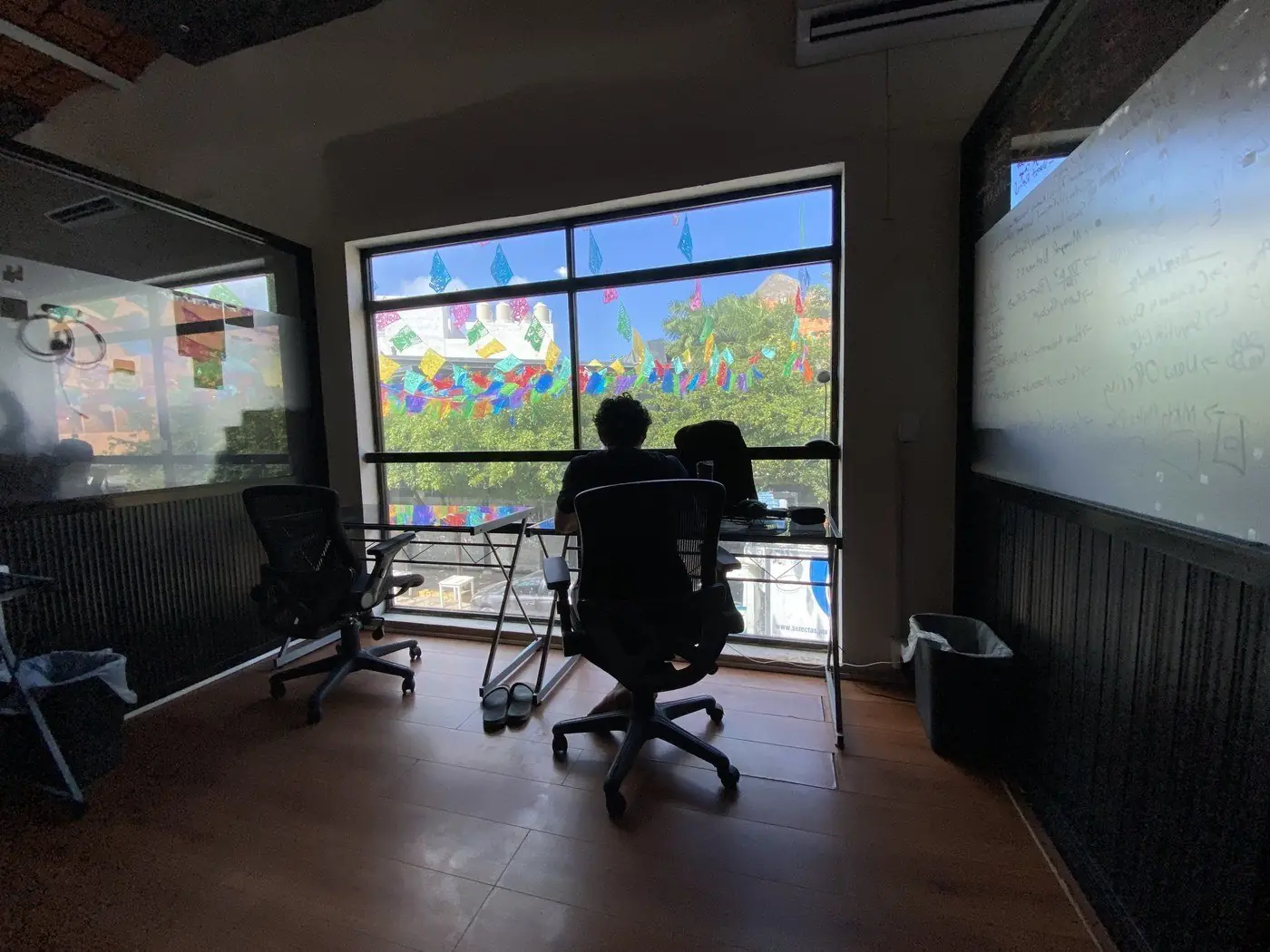
Sayulita Cowork, upstairs on Avenida Revolución, is the serious option: air-conditioned, quiet enough for calls, staffed on weekdays from 9am to 5pm, with round-the-clock access for monthly members and passes by the day, week or month. Alchemize House on Calle Miramar mixes a coworking area with a sauna, cold plunge and pool; in 2026 a day pass was 700 pesos and an unlimited month 3,500.
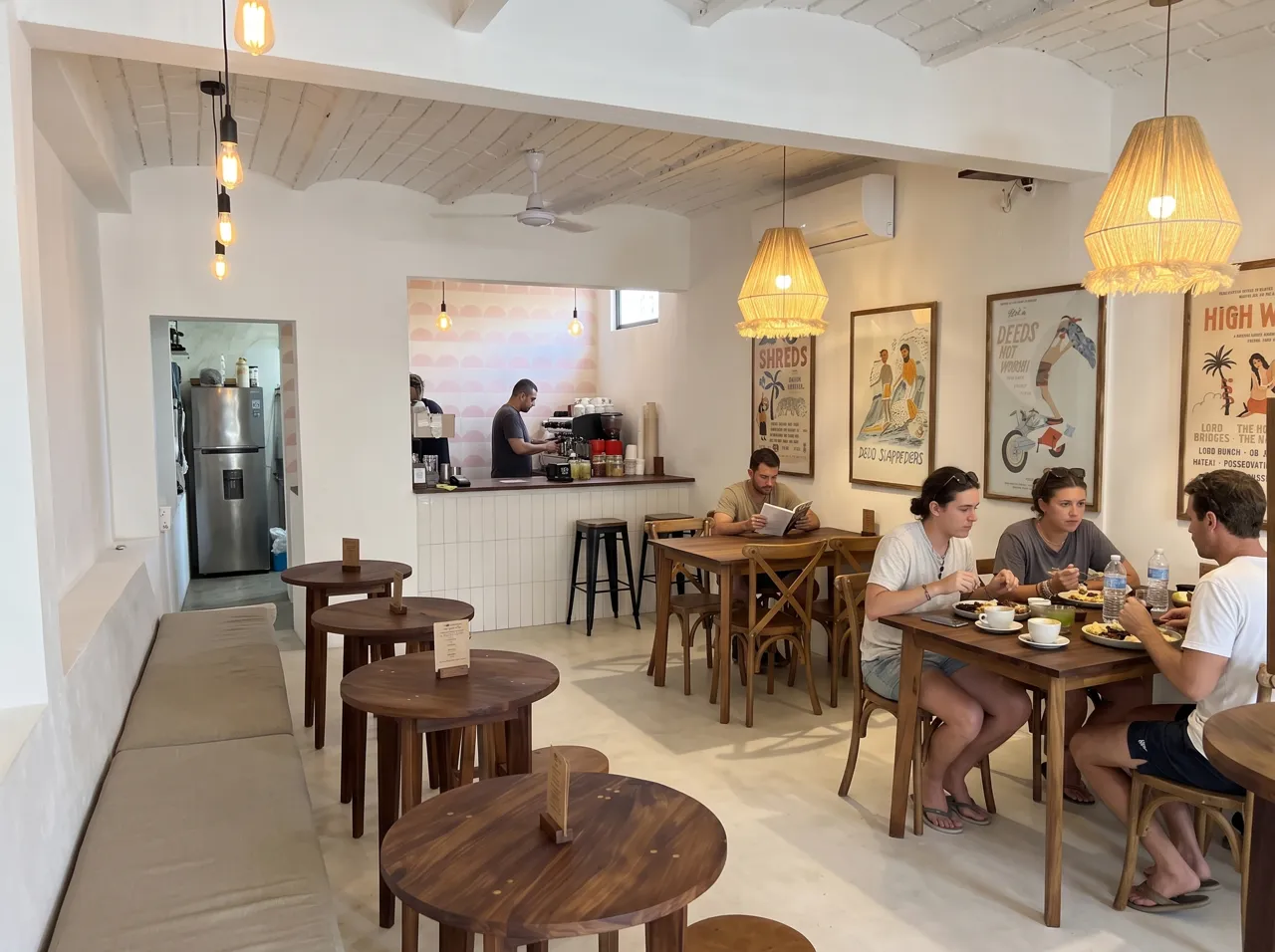
For an hour or two, several cafés have wifi on our place facts. Café El Espresso by the plaza opens at 7am and serves late; Café El Fortín, Marea Café, Organi-K and Café Coyote are morning places; Buenas Olas and Anchor Café add air conditioning; Tropical House, on a quiet lane to the north beach, runs from breakfast into the evening. Order something every hour or so, take calls outside, and give up your table at the lunch rush.
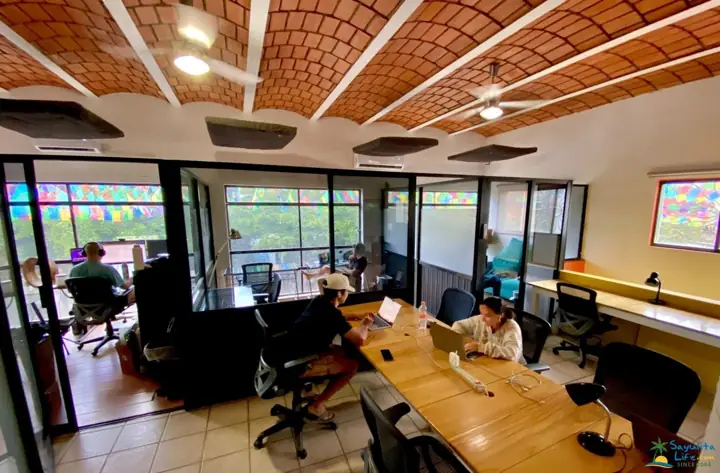
Sayulita Cowork
Air-conditioned coworking with two fibre lines and battery backup; day, week and month passes.

Alchemize House | Social Wellness Club
Coworking with a sauna, cold plunge and pool on the same day pass.
Café El Espresso
Long-running café by the plaza, open 7am to 10pm, with wifi.
Café El Fortín
Mountain-grown coffee and wifi from 7am, for a first hour of work.
Marea Café
A quiet, shaded café in a small plaza with a garden view and wifi.

ORGANI-K Sayulita
A healthy café with wifi on the north side; closed Wednesdays.
Cafe Coyote
A relaxed neighbourhood café that opens at 7am, Monday to Saturday.

Buenas Olas Café
A café with wifi and air conditioning on Avenida Revolución.
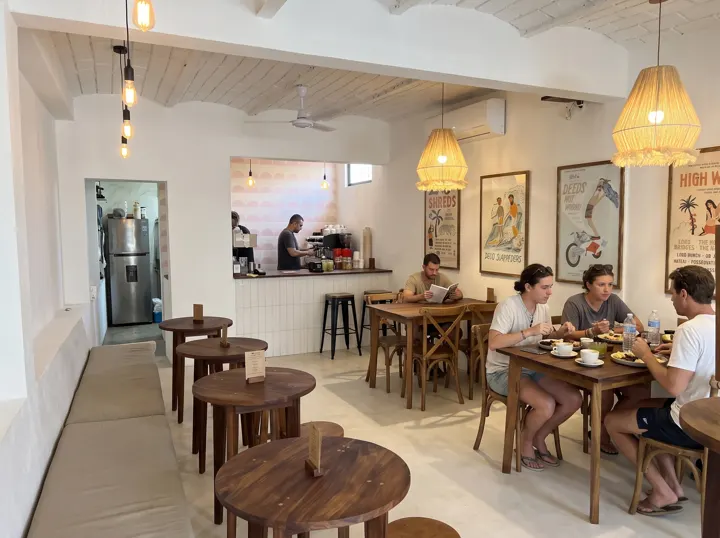
Anchor Cafe
A cosy café with wifi and air conditioning.
Tropical House
A bistro open from breakfast to late, on a quiet lane, with wifi.
A day's rhythm, and the time difference
Sayulita is in the municipality of Bahía de Banderas, which keeps Central time, UTC−6, all year, an hour ahead of the rest of Nayarit. Mexico stopped changing its clocks in 2022, but the US and Canada still do, so the gap with home moves twice a year. From November to March, Sayulita is on the same time as Chicago, an hour behind New York and two hours ahead of Los Angeles. From March to November it's two hours behind New York and an hour ahead of Los Angeles.
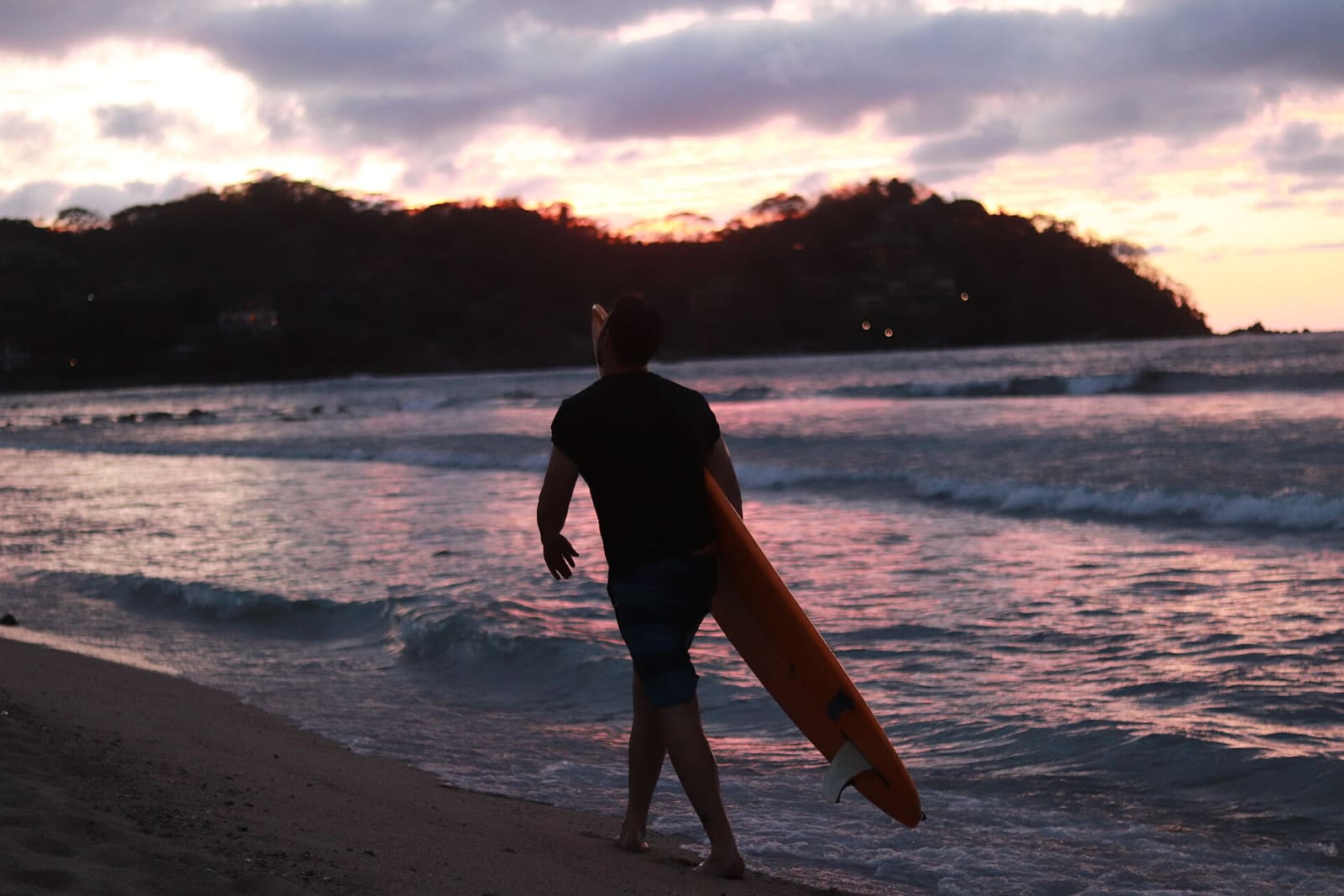
The day here bends around the sea and the sun. The water is usually glassiest early, the middle of the afternoon is the hottest part of the day, and the sun sets between about 6:20pm in late autumn and 7:45pm in midsummer. A working day that suits it looks something like this.
- UTC−6
- all year, no daylight saving
- 2022
- the year Mexico stopped changing its clocks
- 6:30–7:30amFirst light: sunrise is about 6:20 in June and 7:40 in January.
- 7–9amSurf or swim while the sea is glassy, before the onshore breeze.
- 9am–1pmDeep work: the cowork opens at 9 and the morning is cooler.
- 1–4pmThe hottest hours: a long lunch, a siesta or work somewhere with air conditioning.
- 4–6pmCalls with the US and Canada, who are at their desks.
- SunsetDown to the beach: 6:32pm on October 23, as late as 7:46pm in June.
What a month costs
It depends more on the season than anything else. A nomad cost-of-living estimate from May 2026 put a month at about US$2,230: a one-bedroom near the centre at about US$1,100, groceries about US$380, coworking about US$220, eating out about US$350 and utilities about US$150. Some local agencies list small houses for about US$1,000 a month in the low season, from mid-May to October.
In high season, from November to April, monthly rentals cost more and the good ones go early, so book months ahead. Ask whether electricity is included, because air conditioning in the hot months can add a lot to the bill, and whether the price includes the 5 percent lodging tax and IVA.
- ~US$2,230
- a month all in, one estimate (May 2026)
- ~US$1,100
- a one-bedroom near the centre
- 3,500
- pesos for an unlimited month of coworking and sauna at Alchemize
Papers and phones: the 180 days and a Mexican line
Visitors who don't need a visa, such as those from the US and Canada, can stay as tourists for up to 180 days, but the immigration officer decides how many days you get, so ask for the full time at the airport if you need it. The permit is digital now (or a stamp in your passport), it can't be extended from inside Mexico, and it isn't a work permit. The sources we found don't address working remotely for an employer back home; for a longer stay, the usual route is temporary residency, applied for at a Mexican consulate before you travel. The San Diego consulate's 2026 checklist asked for about US$4,049 a month in income over the past six months, or savings averaging about US$68,241 over a year, plus a letter from an employer agreeing to remote work from Mexico; amounts vary by consulate.
For data, a Mexican prepaid SIM or eSIM is cheap: in 2025 Bait offered 12 GB for 30 days for 200 pesos with unlimited calls to Mexico, the US and Canada, and Telcel's prepaid packages cover the same three countries. Since 2026 every Mexican mobile line has to be registered to a person, and unregistered prepaid lines are being cut off by deadlines running to the end of December 2026. Tourists register with a passport, usually a photo and a selfie, when they activate a line, and new lines must be registered within 30 days. Foreign SIMs on roaming aren't affected.
Questions people ask
Is the internet good enough to work from Sayulita?
Usually, yes: fibre where it reaches the street and Starlink in many rentals. Ask your host for a speed test from the room you'll work in, and carry a local SIM as a hotspot backup.
What time zone is Sayulita in?
Central time, UTC−6, all year, with no daylight saving. In northern winter that's the same as Chicago; in northern summer it's an hour ahead of Los Angeles and two hours behind New York.
Is there coworking in Sayulita?
Yes. Sayulita Cowork on Avenida Revolución has air conditioning, two fibre lines and battery backup, with day, week and month passes, and Alchemize House combines coworking with a sauna and pool.
How long can I stay in Sayulita as a tourist?
Up to 180 days, but the immigration officer decides the number of days, and the permit can't be extended inside Mexico. For longer, apply for temporary residency at a Mexican consulate before you travel.
Do I need to register a Mexican SIM card?
Yes. Since 2026 every Mexican mobile line must be registered; tourists do it with a passport when they activate the line, and new lines must be registered within 30 days.
Written by sayulita.co from our own research, checked against 17 sources. Nothing here is paid for. Photos: ; ; ; ; . See something out of date? Tell us.